Field Notes

The full archive

Log of experiments in interaction design. Each entry documents what I built, what I used to build it, and what I learned. Most include an artifact: a prototype, a video, or something you can try.

Design systems

I'm exploring how design systems can be documented to work as well for AI agents as they do for human designers.

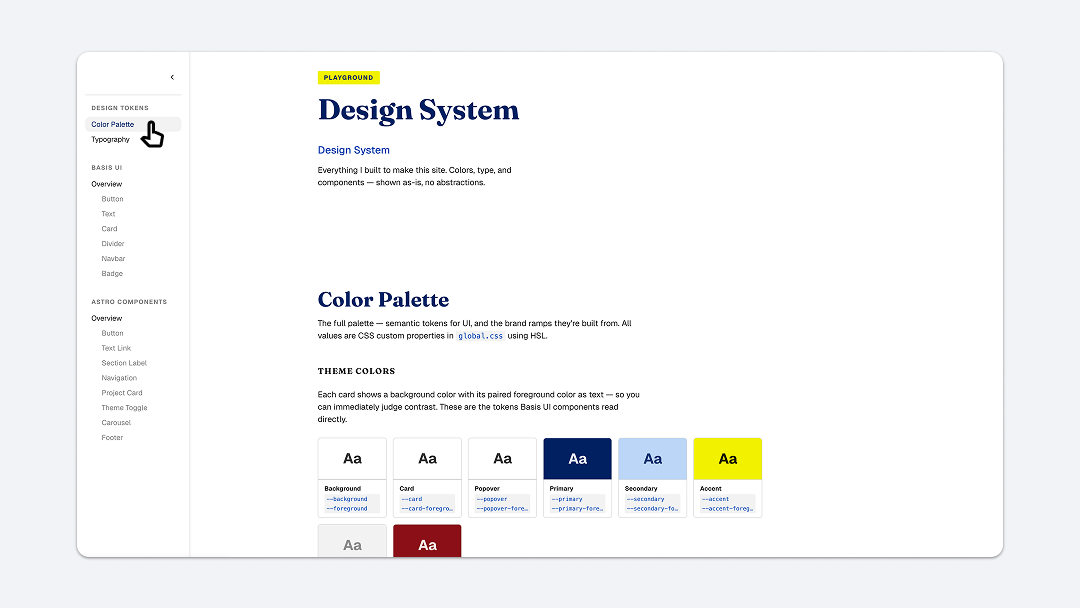
AI-Ready Design Systems

How auditing a startup's design system to make it AI-ready led me to rebuild my portfolio from scratch.

As proof of concept I rebuilt a badge component and documented the workflow: a Figma component with Variables instead of hardwired Styles, a shared token system in Figma and CSS, a coded version in shadcn/ui, and a live documentation page of the proposed changes. Shipping it taught me how design system components reach production, reshaping how I built my own site with Astro and Basis UI.

Component libraries:
Basis UI shadcn/ui
Read more

Multimodal work

I am evaluating tools to create AI agents and virtual humans powered by the latest AI models, with a focus on designing multimodal communication patterns. I'm interested in how these tools can facilitate more natural interactions between humans and technology.

Interaction design experiments in multimodal AI

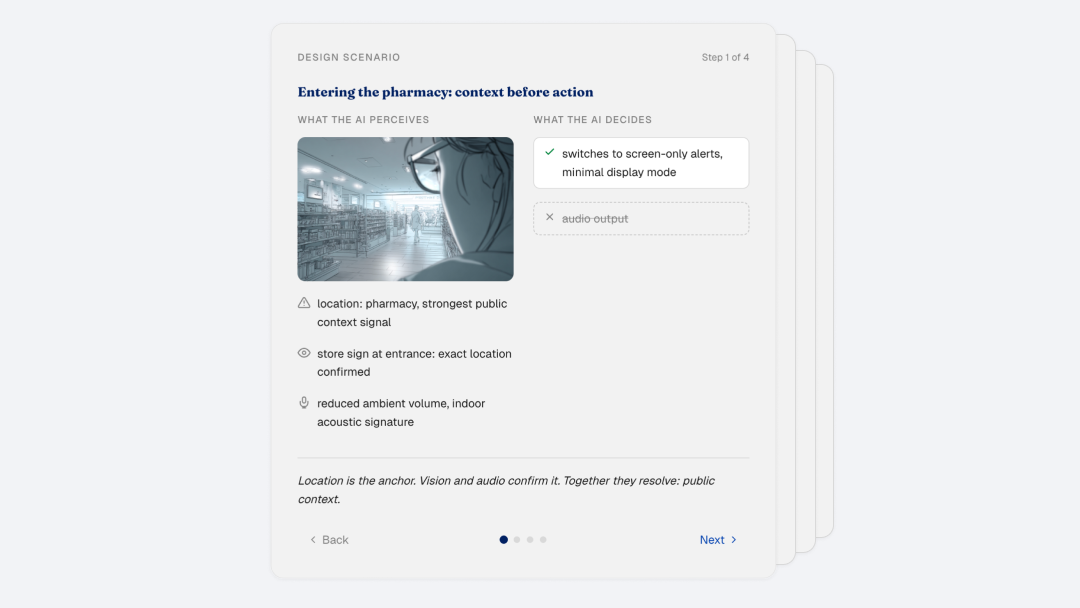
Multimodal AI should fit like broken-in denim

From years of designing with people with disabilities, what I believe multimodal AI still needs to get right.

I built storyboards observing a pharmacy scenario from the person's point of view. Each frame shows two columns side by side: what the person and their device can see, hear, and sense socially, compared with potential system behaviors, including what the system chooses not to do. I learned to create design concepts through observation, writing one line to name each behavior as an idea.

Tools:
Claude Code in VS
Explore experiment

PharmAssist: Default privacy patterns

Designing privacy for a pharmacy counter kiosk. Learning Voiceflow along the way.

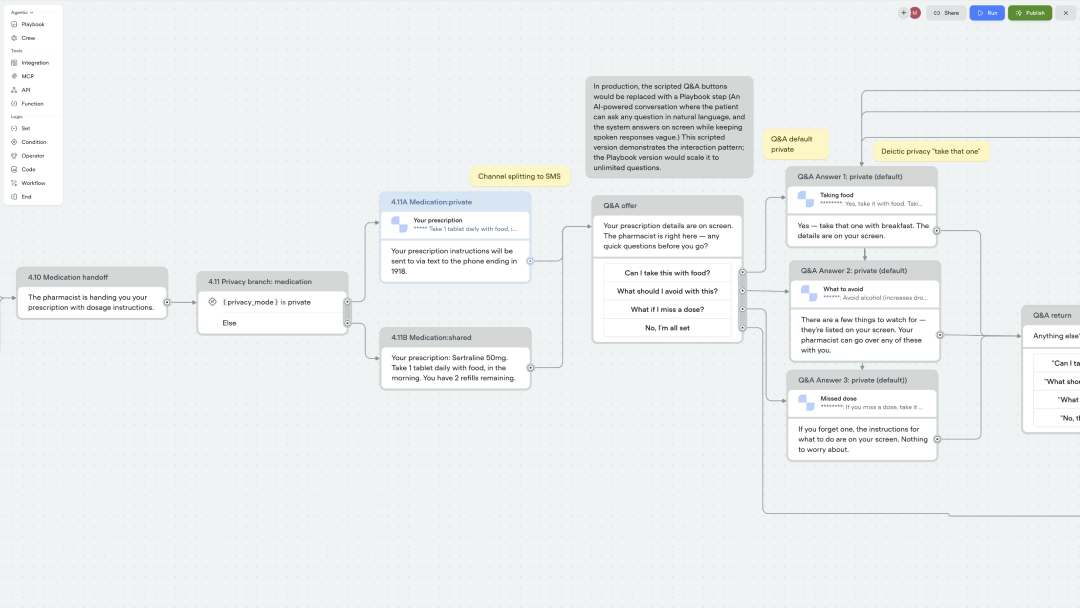
I built a Voiceflow prototype that includes both the conversation flow and the screen the person sees, side by side on the same canvas. I learned how to use Voiceflow and discovered scenarios where splitting information across voice and screen made sense for privacy. Cards represent what appears on the phone screen. A single privacy variable controls the entire flow.

Explore experiment

PrivacySim: Virtual AI Coach

A virtual human that coaches pharmacists to protect personal information at the counter prototyped with Tavus.io

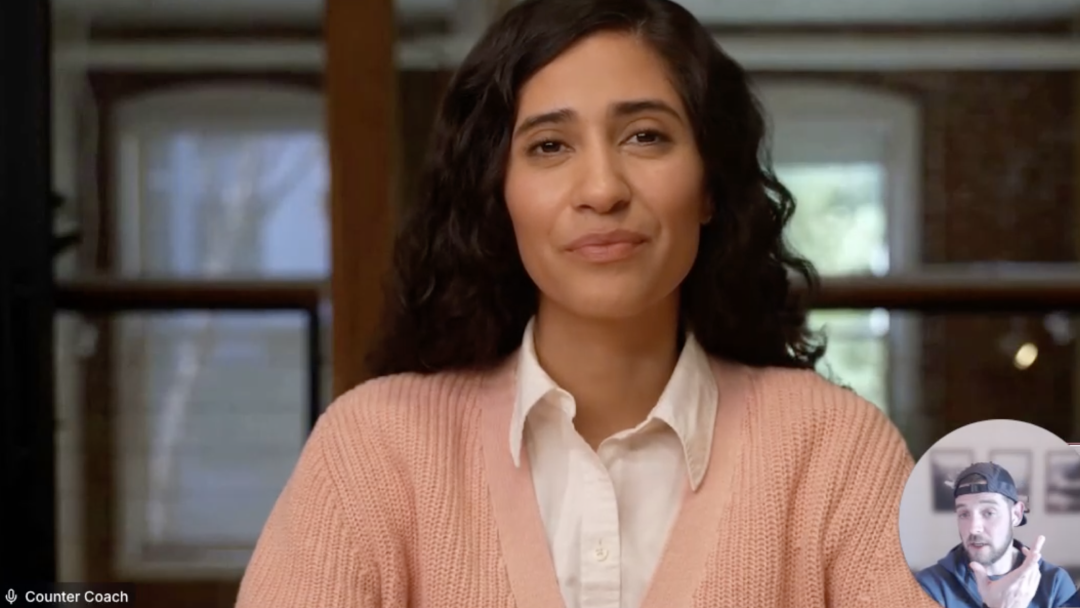
I built a virtual human that trains pharmacists on protecting personal identifiable information. I learned to shift from linear conversation flows to designing a system prompt and context that enables natural, non-repetitive coaching. The virtual human gives real-time feedback, can be interrupted, and responds to the trainee's pace.

Tools:
Explore experiment

Marco's Briefcase: My WhatsApp Superagent

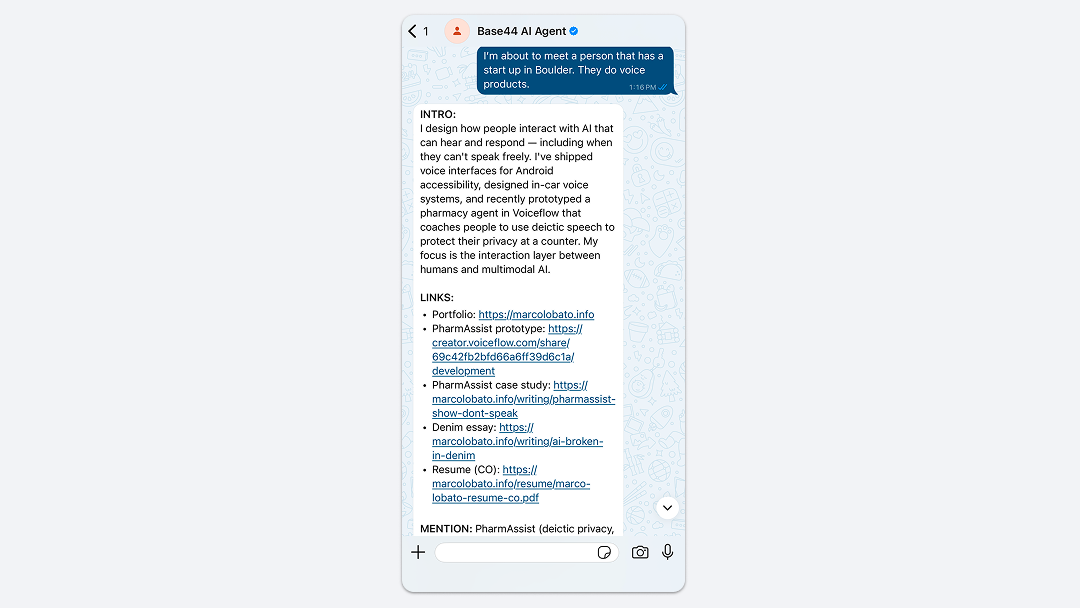
I built a Base44 Superagent on WhatsApp that pulls my resume, work samples, and talking points based on a specific audience I define before a meeting. I learned how to build a Superagent and how to structure audience profiles as a filter for surfacing the right information in conversation.

Tools:
Base44
Screenshot of live agent on WhatsApp retrieving info at AI Builders Meetup

Design concept glossary

Concepts named across the experiments above.

Deictic privacy
Speaking in words that only resolve with shared context, using pronouns and spatial references ("that," "there," "it") instead of explicit details.
Default-private
Ensuring that sensitive details and personally identifiable information remain protected by making non-disclosure the standard setting.
Channel splitting
Strategically utilizing diverse communication paths to time and tailor content delivery, ensuring messages are optimized for the specific situation and audience.
Show, don't speak
In the context of conversation design, the "show, don't speak" principle utilizes visual aids to convey information. This approach keeps details private or provides necessary context by displaying the specific items or concepts under discussion, rather than relying solely on verbal explanation.
Context-released information
The strategic practice of timing the delivery of information based on an AI's real-time understanding of the user's immediate social or physical environment.
Cooperative recording
A mutual agreement to record and transcribe a dialogue so participants can capture complex spoken details, particularly during consultations with specialists like doctors or pharmacists.

Past entries